Home Services Portfolio Blog About Us Contact
> services.enterprise()

Enterprise Software Development
Services Built to Run for Years

We build and modernise the systems established companies actually run on — custom operational platforms, integrations between tools that were never designed to talk to each other, and replacements for legacy software that has turned into the bottleneck. One senior team, from architecture through to long-term maintenance.

// what we build

Enterprise software development services

Enterprise projects carry constraints a startup product doesn't: more systems to integrate with, more stakeholders to satisfy, data that cannot be lost, and a codebase somebody will still be maintaining in five years. We design around those constraints from the first architecture decision instead of discovering them at launch.

Custom Enterprise Platforms

Core operational systems built around how your business actually works — the workflows, approvals, pricing rules, and exceptions that no packaged product models correctly.

System Integration & APIs

ERPs, CRMs, payment providers, warehouses, and internal tools connected through documented APIs, so data stops being exported, re-keyed, and reconciled by hand.

Custom ERP & CRM Work

When a standard ERP or CRM covers most of your process but not the part that matters, we build the missing piece — as an extension, or as a system that runs alongside it.

Legacy Modernisation

Ageing systems rebuilt without losing the business logic buried inside them. We migrate in stages and keep the old system running until the new one has earned the traffic.

Reporting & Dashboards

Operational reporting, role-specific dashboards, and exports that put the same set of numbers in front of finance, operations, and the board — calculated once, not per department.

Security & Access Control

SSO, granular role-based permissions, audit trails, and encryption at rest and in transit — the controls IT and procurement will ask about before anything goes live.

// when it makes sense

When custom enterprise software beats off-the-shelf

Off-the-shelf software is the right answer more often than agencies like to admit. If your process is genuinely standard, buy the standard tool and spend your money elsewhere. Custom enterprise software development earns its cost in three situations we see over and over:

  • The process is the advantage. The way you price, route, schedule, or fulfil is part of why customers choose you, and packaged software quietly forces you to operate like everyone else who bought it.
  • The tools don't talk. Three or four systems each hold part of the truth, and people bridge the gaps with spreadsheets, CSV exports, and re-typing — which is where both the delay and the errors come from.
  • Licensing scales the wrong way. Per-seat costs climb with headcount while the product covers less of what you need each year, and the renewal conversation gets worse every cycle.

If you're still weighing the two options, we wrote a longer comparison of custom software versus off-the-shelf. And if the answer is custom, the next question is scope. Most enterprise builds go better as a sequence of releases than as one eighteen-month project, so we will usually push you toward a smaller first phase that puts working software in front of real users inside a quarter.
// the stack

The stack behind our enterprise builds

We build backends on Laravel and PHP, with Vue or React on the front end, PostgreSQL or MySQL for data, and Elasticsearch where search and reporting get heavy enough to hurt a relational database. Integrations run through documented REST APIs, queues, and webhooks rather than one-off scripts nobody can find two years later.

Everything ships on cloud infrastructure with Docker, CI/CD, and monitoring, and we write down architecture decisions as we make them — so your internal team, or whoever comes after us, can pick the system up without an archaeology project.

Talk through your systems →
Backend
Laravel, PHP, REST APIs
Frontend
Vue, React, modern JS/TS
Data & Search
PostgreSQL, MySQL, Elasticsearch
Integration
APIs, webhooks, queues, SSO
Infrastructure
AWS, Docker, CI/CD, monitoring
// how we work

How an enterprise engagement works

1 · Audit

We map the systems you run today, where the data actually lives, and which parts of the process are costing your team the most time.

2 · Architect

A written architecture and a phased roadmap: what ships first, what it has to integrate with, and what can safely wait.

3 · Deliver in phases

Short cycles ending in working software, released to one team or one region before a full rollout.

4 · Run & extend

Monitoring, support, and the same engineers available for the next phase instead of vanishing at handover.

Most of this work runs as a dedicated development team embedded with yours — daily standups on your calendar, your tracker, your release schedule. We work from Europe with hours that cover the full UK day and the US morning, which is the practical argument for nearshore software development: senior engineers, a genuinely shared working day, and rates well below a US or UK agency.

// choosing a partner

Choosing an enterprise software development partner

Enterprise software outlives the contract that produced it, so the questions worth asking are mostly about what happens after go-live:

  • Who owns the code and the IP? It should be you, in your repository, from the first commit — not delivered as a zip file at the end.
  • What does handover look like? Ask to see the documentation and deployment setup from a finished project, not a promise about yours.
  • Who writes the code? Plenty of agencies pitch with senior people and staff with juniors after signature. Ask who is on the team and talk to them.
  • How is change priced? Requirements move on every enterprise project. A partner who has a straightforward answer for that is easier to work with than one whose margin depends on change requests.
  • How do they handle security review? Access control, audit logging, and data handling should be part of the build, not a remediation project after your IT team looks at it.

Our broader take on this is in how to choose a software development company. For our part: we have been building software since 2014, have shipped 30+ products for clients in six countries, and the people you meet on the first call are the ones who write your code.

// selected work

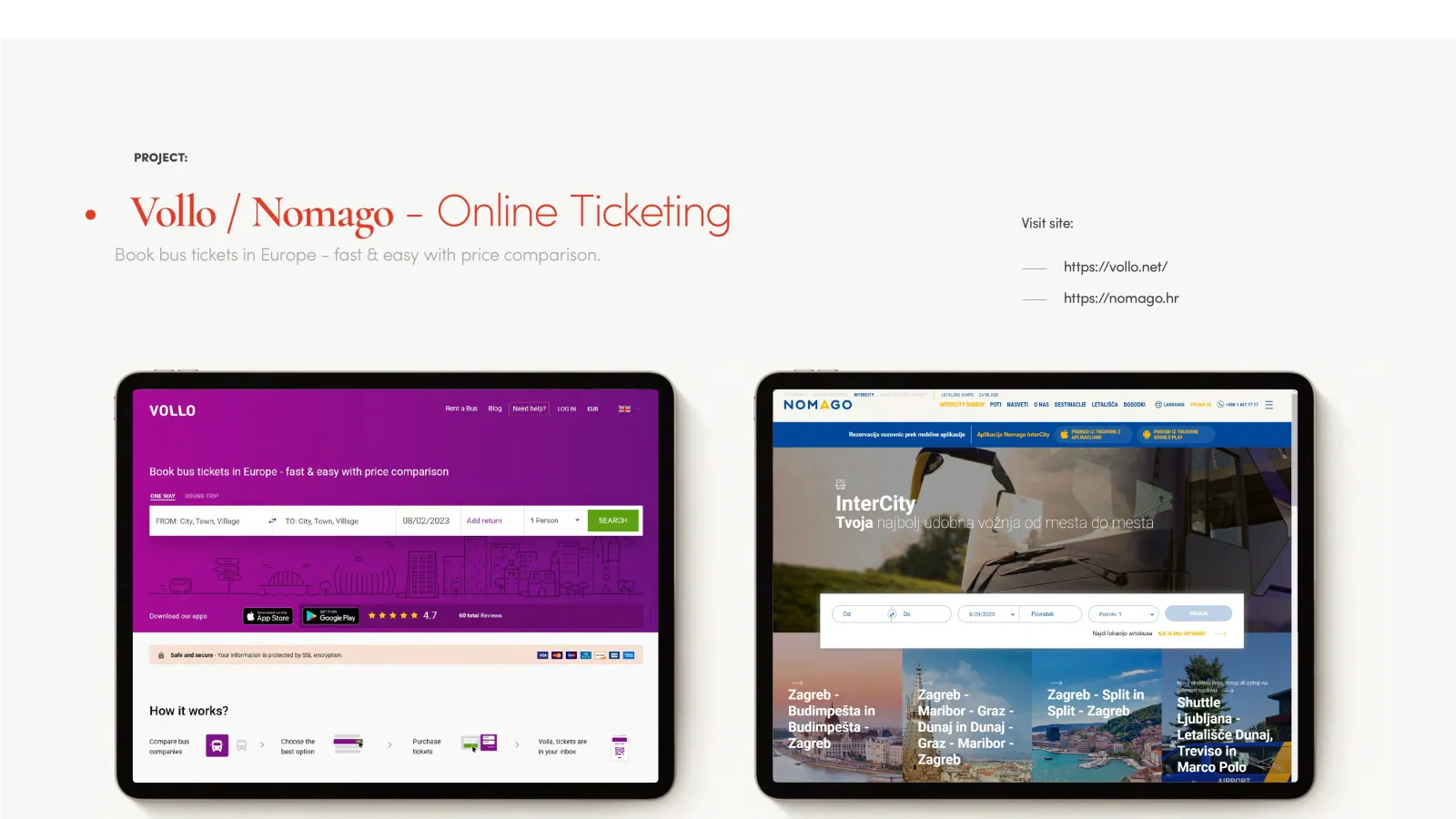
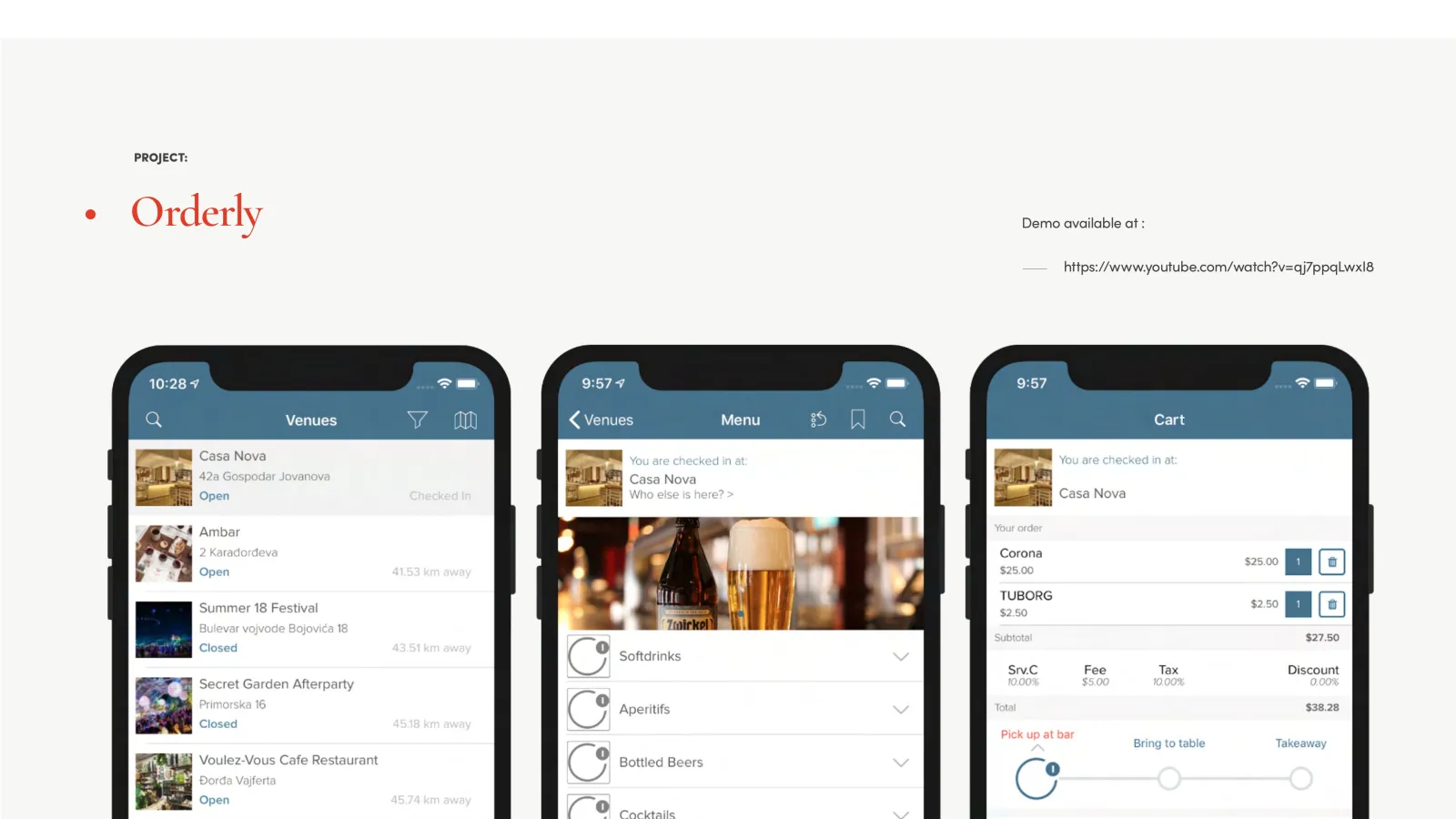
Systems we've built and run

See the full portfolio →
Outgrown the software you're running?

Let's scope the first phase